
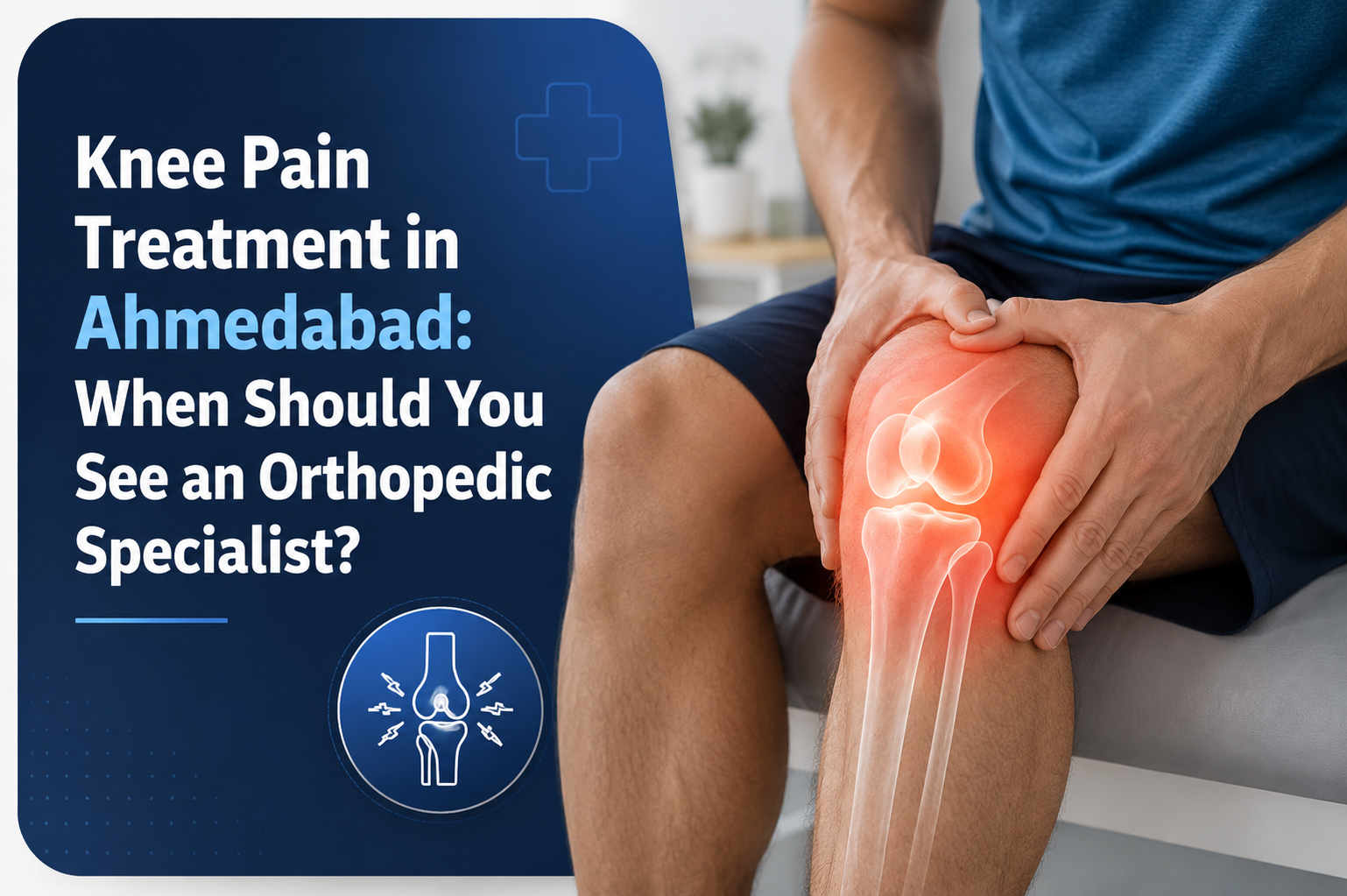
Knee pain can affect people of almost every age. A minor strain may improve with rest, while persistent pain can sometimes be linked to arthritis, ligament injuries, cartilage damage, inflammation or other joint problems. For people in Ahmedabad, Sola, Science City and nearby areas, knowing when knee pain requires professional assessment can help prevent a minor problem from becoming a long-term mobility issue.
If knee pain is interfering with walking, climbing stairs, exercising, sleeping or everyday activities, it may be time to consult an orthopedic specialist. Early assessment can help identify the underlying cause and determine whether conservative treatment, physiotherapy, medication, injections or a surgical procedure may be appropriate.
When Should You See an Orthopedic Specialist for Knee Pain?
You do not necessarily need to see a specialist for every episode of knee discomfort. However, an orthopedic consultation is advisable when pain is persistent, recurrent or affecting your normal activities.
Consider seeking professional evaluation if you experience:
- Knee pain that continues or repeatedly returns
- Swelling around the knee joint
- Persistent stiffness or difficulty bending the knee
- Pain while walking, standing or climbing stairs
- Knee pain that affects sleep or daily activities
- A feeling that the knee is unstable or giving way
- Difficulty putting weight on the affected leg
- Pain following a fall, sports injury or accident
- Clicking, locking or restricted knee movement
- Symptoms that do not improve with rest and basic self-care
A specialist can evaluate your symptoms, medical history and physical condition to determine the likely cause and recommend an appropriate treatment plan.
What Causes Knee Pain?
Knee pain can have many different causes. The right treatment depends on what is affecting the joint.
Osteoarthritis
Osteoarthritis is a common cause of ongoing knee pain, particularly as people get older. Gradual wear of the protective cartilage can lead to pain, stiffness, swelling and reduced movement. In advanced cases, everyday activities such as walking, climbing stairs or standing up from a chair may become difficult.
Sports and Ligament Injuries
Sports activities, sudden twisting movements and accidents can cause ligament injuries such as ACL injuries. Meniscus injuries and other soft-tissue problems can also produce pain, swelling, instability or restricted movement.
Overuse and Muscle Strain
Repetitive physical activity, sudden increases in exercise or prolonged stress on the joint can contribute to knee discomfort. Appropriate rest, rehabilitation and professional guidance may help manage these problems.
Age-Related Joint Changes
Changes in cartilage, muscles and joint structures can occur with ageing. Persistent symptoms should not simply be considered a normal part of getting older, particularly when they affect mobility or independence.
What Are the Warning Signs of a More Serious Knee Problem?
Some symptoms deserve prompt medical attention. Severe pain after an injury, inability to put weight on the leg, significant swelling, visible deformity, a locked knee or sudden loss of movement can require urgent assessment.
If knee pain develops with fever, significant redness or other concerning symptoms, medical evaluation is also important.
The key point is simple: persistent or function-limiting knee pain should not be ignored. Early evaluation may help identify the problem before symptoms become more difficult to manage.
How Is Knee Pain Diagnosed?
An orthopedic consultation usually begins with a detailed discussion about your symptoms. Your doctor may ask when the pain started, whether it followed an injury, what activities make it worse and whether you have experienced swelling, stiffness or instability.
A physical examination may then assess:
- Knee movement
- Joint stability
- Tenderness
- Swelling
- Muscle strength
- Walking pattern
- Range of motion
Depending on the suspected condition, imaging or other diagnostic tests may be recommended.
The purpose of diagnosis is not simply to identify where the pain occurs. It is to understand why the knee is painful and select treatment according to the patient’s individual condition.
What Are the Treatment Options for Knee Pain?
Treatment depends on the cause, severity and overall health of the patient. Knee pain treatment does not automatically mean surgery.
Depending on the diagnosis, treatment may include:
Lifestyle and Activity Modification
Reducing activities that aggravate symptoms while maintaining appropriate movement may help some patients manage knee discomfort.
Medication
A doctor may recommend appropriate medicines depending on the patient’s condition and medical history. Medicines should be taken only according to professional advice.
Physiotherapy and Rehabilitation
Physiotherapy can help improve muscle strength, flexibility, balance and joint function. Rehabilitation may also play an important role after an injury or orthopedic procedure.
Injections
For selected patients and specific conditions, a specialist may consider injections as part of a broader treatment plan. Suitability depends on individual clinical assessment.
Arthroscopic or Other Orthopedic Procedures
Certain ligament, cartilage or meniscus problems may require a surgical approach. The recommended procedure depends on the type and severity of the injury.
Knee Replacement
For advanced joint damage, particularly when severe arthritis causes persistent pain and significantly limits daily activities, knee replacement may be considered.
At Maruti Multispeciality Hospital, knee replacement services include evaluation and treatment for damaged knee joints, with options such as total and partial knee replacement depending on the extent of joint damage.
Does Every Knee Pain Patient Need Knee Replacement?
No. Knee pain does not automatically mean that knee replacement surgery is required.
Many knee problems can be managed without surgery, depending on the underlying cause and severity. A specialist first evaluates the condition and considers appropriate non-surgical treatments wherever clinically suitable.
Knee replacement may be considered when significant joint damage causes persistent pain and difficulty with everyday activities and other appropriate treatment options are no longer providing sufficient relief.
The decision should always be based on an individual medical evaluation rather than age or pain alone.
Why Early Orthopedic Consultation Matters
Ignoring persistent knee pain can gradually affect how you walk and move. People may start avoiding stairs, exercise or normal activities because of discomfort. Over time, reduced activity can also affect muscle strength and overall mobility.
An orthopedic consultation can provide a clearer understanding of the problem and help you make an informed decision about treatment.
For residents of Ahmedabad, Sola, Science City and surrounding areas, choosing a convenient orthopedic care centre can also make follow-up appointments and rehabilitation easier.
Knee Pain Treatment in Ahmedabad: When Should You Take the Next Step?
If your knee pain is occasional and mild, it may improve with appropriate rest and basic care. However, persistent pain, swelling, stiffness, instability or difficulty performing normal activities deserves professional assessment.
A useful rule is:
Pain + persistence + reduced mobility = consider an orthopedic consultation.
Getting the right diagnosis is the first step toward choosing the right treatment. Depending on the cause, your care may involve conservative management, physiotherapy, rehabilitation, medication, injections, minimally invasive procedures or knee replacement.
Frequently Asked Questions
1. When should I see a doctor for knee pain?
See an orthopedic specialist when knee pain persists, repeatedly returns, causes swelling or stiffness, affects walking or daily activities, or develops after an injury.
2. Is knee pain always caused by arthritis?
No. Knee pain can result from arthritis, ligament or meniscus injuries, overuse, muscle problems, trauma and other conditions. A clinical evaluation is needed to identify the cause.
3. Can knee pain be treated without surgery?
Many knee conditions can be managed with non-surgical approaches such as activity modification, medication, physiotherapy and rehabilitation. Treatment depends on the diagnosis.
4. When is knee replacement considered?
Knee replacement may be considered when significant joint damage causes persistent pain and functional limitations despite appropriate non-surgical treatment.
5. Where can I get knee pain treatment in Ahmedabad?
Patients looking for orthopedic evaluation and knee treatment in Ahmedabad can consult the orthopedic team at Maruti Multispeciality Hospital for an assessment and personalized treatment plan.
Consult an Orthopedic Specialist at Maruti Multispeciality Hospital
If you are looking for knee pain treatment in Ahmedabad, professional evaluation can help determine the cause of your symptoms and the most appropriate treatment approach.
Maruti Multispeciality Hospital provides orthopedic and joint replacement care for patients with different knee and joint conditions. The hospital’s orthopedic services include knee replacement and treatment approaches tailored to the patient’s condition.
The hospital’s orthopaedic team includes experienced Orthopaedic and Joint Replacement Surgeons with more than two decades of experience in orthopaedics and joint replacement care.
If knee pain is affecting your mobility, exercise, work or everyday life, do not rely on guesswork about the cause.
Book an orthopedic consultation with Maruti Multispeciality Hospital to discuss your knee pain, understand the underlying condition and explore suitable treatment options.
Website: https://marutihospital.com/
Call: 9537881234 / 9537991234