
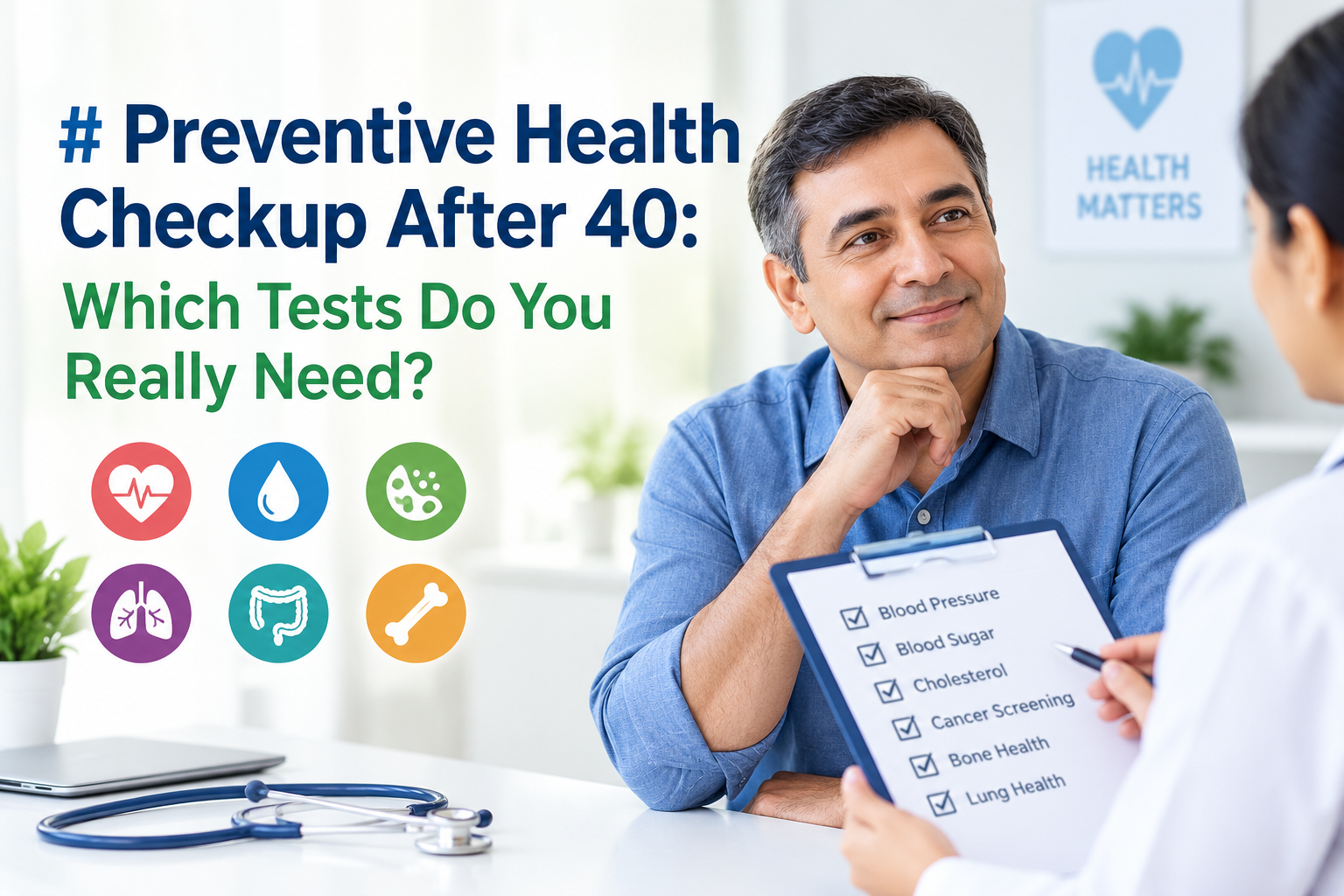
Turning 40 is often a good time to become more proactive about your health. A Preventive Health Checkup After 40 can help identify certain health risks early, even when you do not have noticeable symptoms. Waiting until you feel unwell may not always be the best approach to preventive care.
A Preventive Health Checkup After 40 is not necessarily about getting every possible test. The more useful approach is to understand which screenings are relevant to your age, medical history, family history, lifestyle and individual risk factors.
Blood pressure, blood sugar, cholesterol and certain cancer screenings may become increasingly relevant with age, while other tests may only be appropriate when a doctor identifies a specific risk or symptom.
The goal of preventive healthcare is simple: identify important health risks early, understand your current health status and make informed decisions about future care.
Why Is Preventive Health Screening Important After 40?
Some common health conditions can remain unnoticed for years. High blood pressure, elevated blood sugar or abnormal cholesterol levels may not always produce obvious symptoms.
Regular screening can help identify these issues before they contribute to complications.
However, preventive screening should not be treated as a one-size-fits-all checklist. Doctors consider factors such as age, sex, family history, previous test results, lifestyle and existing medical conditions when deciding which tests are appropriate.
That means your ideal preventive health checkup may be different from someone else’s.
Which Health Tests May Be Important After 40?
There is no universal “full body test list” that every person over 40 needs. Instead, several areas of health deserve regular attention.
1. Blood Pressure Check
Blood pressure is one of the simplest measurements in preventive healthcare, but it can provide valuable information about cardiovascular risk.
High blood pressure may not produce obvious symptoms. Regular monitoring can help identify elevated readings and determine whether further confirmation or treatment is needed.
The USPSTF recommends screening adults for hypertension and notes that annual screening is a reasonable approach for adults aged 40 years or older and for people at increased risk. Diagnosis should be confirmed outside the clinic when appropriate.
For this reason, blood pressure measurement is often an important component of a routine checkup after 40.
2. Blood Sugar and Diabetes Screening
Diabetes and prediabetes can develop without obvious symptoms. Blood glucose testing may therefore be an important part of preventive care, particularly for people with risk factors.
Common screening approaches include tests such as fasting plasma glucose, HbA1c or an oral glucose tolerance test, depending on the clinical situation.
For adults aged 35 to 70 with overweight or obesity, the USPSTF recommends screening for prediabetes and type 2 diabetes. The appropriate testing schedule depends on individual circumstances.
People with a strong family history, previous abnormal results or other risk factors may require individualized advice.
3. Cholesterol Testing
Cholesterol levels are relevant to cardiovascular health. An abnormal lipid profile may increase long-term cardiovascular risk, particularly when combined with high blood pressure, diabetes, smoking or other risk factors.
A doctor may evaluate total cholesterol, LDL cholesterol, HDL cholesterol and triglycerides as part of an overall cardiovascular risk assessment.
The important point is not simply whether one cholesterol number is “high” or “low.” Healthcare professionals consider the complete risk profile when discussing prevention and treatment.
4. Heart Health Assessment
After 40, it can be useful to discuss overall cardiovascular risk, particularly when there is a history of high blood pressure, diabetes, high cholesterol, smoking, obesity or heart disease in the family.
A routine consultation may help identify whether additional cardiac assessment is appropriate.
Not every healthy person needs every cardiac test. Tests such as an ECG or imaging should generally be guided by symptoms, risk factors and clinical judgment rather than automatically added to every checkup.
Cancer Screening: Which Tests Matter?
Cancer screening is one of the areas where age-based recommendations can be particularly important.
The appropriate screening depends on the type of cancer, age, sex, family history and individual risk.
Colorectal Cancer Screening
For average-risk adults, the USPSTF recommends colorectal cancer screening beginning at age 45 and continuing through age 75. Several screening options are available, including stool-based tests and colonoscopy, with the recommended interval depending on the test.
This means that people approaching or passing 40 should be aware that colorectal cancer screening may become relevant before 50, rather than assuming that all cancer screening begins at the same age.
People with a family history or other risk factors may need an individualized plan.
Breast Cancer Screening
Women should discuss breast cancer screening with their healthcare professional based on age, personal risk, family history and current recommendations.
The appropriate screening method and frequency can vary.
Cervical Cancer Screening
Cervical cancer screening is generally age-specific and depends on factors such as age and previous screening history. Women should discuss the appropriate screening method and interval with their doctor rather than assuming that more frequent testing is always better.
Other Cancer Screening
Additional cancer screening may be appropriate for some people based on smoking history, family history, symptoms or other risk factors.
The key principle is personalization rather than ordering every available test.
Do You Need a Full Body Health Checkup Every Year?
Not necessarily.
A “full body health checkup” can mean different things depending on the hospital or diagnostic provider. Some packages contain a broad collection of blood tests, while others include imaging or specialist consultations.
More tests do not automatically mean better preventive care.
The most useful package is one that is relevant to your health profile and followed by appropriate medical interpretation.
For example, someone with diabetes may require more focused monitoring than a healthy individual without risk factors. A person with a strong family history of a particular condition may need earlier or more frequent screening.
Which Tests Are Not Automatically Needed?
Preventive healthcare should also consider tests that may not be necessary for everyone.
Advanced scans, cardiac imaging, tumor-marker tests or other investigations should not automatically be considered essential just because someone is over 40.
Unnecessary testing can lead to false positives, anxiety, additional procedures and avoidable expense.
A doctor can help determine which tests offer meaningful value based on your risk profile and symptoms.
Symptoms Still Matter
Preventive screening is designed for people who may not have symptoms, but symptoms should never be ignored simply because a recent health package was normal.
Persistent chest discomfort, unexplained weight loss, blood in the stool, changes in bowel habits, unusual fatigue, breathing difficulty, unexplained bleeding or other concerning symptoms should be medically evaluated.
A screening test is not a substitute for diagnosis when symptoms are already present.
What Should a Health Checkup After 40 Include?
The exact combination should be personalized, but a doctor may consider areas such as:
- Blood pressure assessment
- Blood sugar or diabetes screening
- Cholesterol and lipid evaluation
- Weight and BMI assessment
- Lifestyle and dietary review
- Cardiovascular risk assessment
- Age-appropriate cancer screening
- Family history review
- Kidney or liver testing when clinically appropriate
- Other tests based on symptoms or existing conditions
The purpose is to create a practical health profile rather than simply collect a large number of laboratory values.
How Often Should You Have Preventive Screening?
There is no single schedule that applies to every test.
Some measurements may be checked regularly, while certain cancer screenings occur at longer intervals. People with abnormal findings or higher-risk medical conditions may require more frequent follow-up.
For example, the USPSTF considers annual hypertension screening reasonable for adults aged 40 and older, while colorectal cancer screening has its own age- and test-specific intervals.
Your doctor can help establish a screening calendar based on your health history rather than relying on a generic package.
What Should You Tell Your Doctor Before a Checkup?
A preventive consultation becomes more useful when you provide complete information.
Tell your doctor about:
- Previous diagnoses
- Current medicines
- Family history of major diseases
- Smoking or tobacco use
- Alcohol intake
- Physical activity
- Dietary habits
- Previous abnormal test results
- New or persistent symptoms
This information can influence which tests are recommended.
Preventive Health Checkup in Ahmedabad
For people looking for a preventive health checkup in Ahmedabad, choosing a healthcare provider where test results can be discussed with medical professionals can be valuable.
A health checkup should ideally be more than a collection of laboratory reports. The results need to be interpreted in the context of your age, medical history and risk factors.
Maruti Multispeciality Hospital in Ahmedabad offers multispeciality healthcare services and medical consultation for individuals looking to take a more proactive approach to their health.
Frequently Asked Questions About Health Checkups After 40
Which tests should I have after 40?
There is no universal list for everyone. Blood pressure, diabetes screening, cholesterol evaluation and age-appropriate cancer screening may be relevant, while other tests depend on symptoms and individual risk factors.
Is a full body health checkup necessary every year after 40?
Not every person needs the same set of tests every year. Screening intervals vary by test and by individual risk. A doctor can help create a personalized preventive care schedule.
Should I check my blood sugar after 40?
Blood sugar screening may be appropriate depending on age and risk factors. Adults with overweight or obesity between ages 35 and 70 are specifically included in USPSTF diabetes screening recommendations.
When should colorectal cancer screening begin?
For average-risk adults, USPSTF recommends colorectal cancer screening beginning at age 45. Different screening methods have different recommended intervals.
Do I need an ECG as part of every health checkup after 40?
Not necessarily. An ECG or other cardiac investigation should be considered based on symptoms, risk factors and clinical assessment rather than age alone.
Can preventive screening detect health problems before symptoms appear?
Some screening tests are specifically designed to identify certain conditions in people without symptoms. However, no screening test can detect every disease, and normal results do not guarantee that a person has no health problems.
Final Takeaway
A preventive health checkup after 40 should focus on the tests that are genuinely relevant to you rather than simply choosing the largest package.
Blood pressure, blood sugar, cholesterol, cardiovascular risk assessment and age-appropriate cancer screening may all have a role in preventive care. However, the right combination and timing depend on personal health factors.
The best approach is to discuss your medical history, family history and lifestyle with a healthcare professional and create a screening plan that fits your needs.
For people searching for a full body health checkup in Ahmedabad or preventive medical consultation, Maruti Multispeciality Hospital, Sola Road can be a convenient option for discussing appropriate healthcare and screening needs.
Consult Maruti Multispeciality Hospital
If you are over 40 and have not reviewed your overall health recently, a consultation can help you understand which preventive assessments may be appropriate for you.