
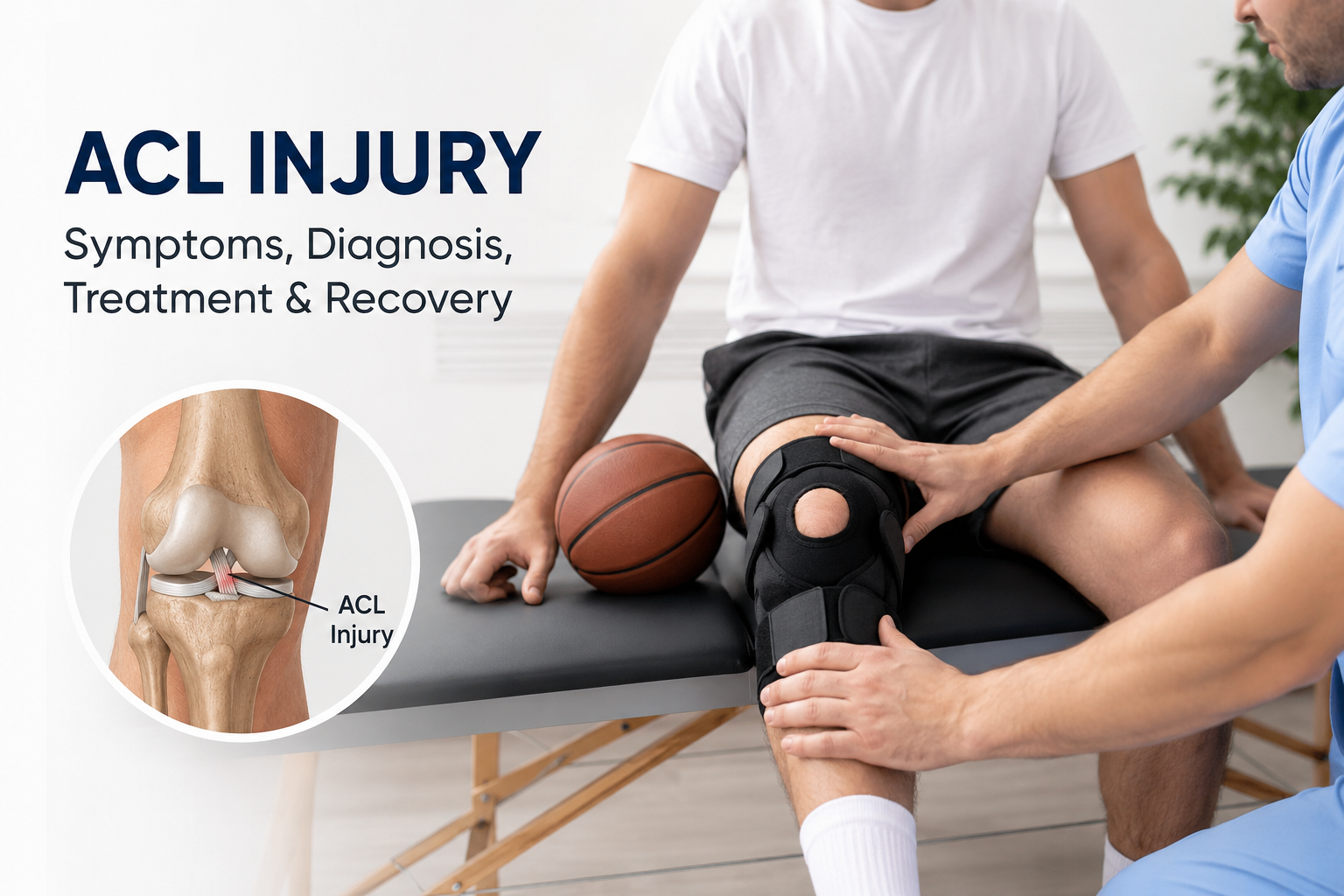
An Anterior Cruciate Ligament (ACL) injury is one of the most common knee injuries, especially among athletes and physically active individuals. However, ACL tears are not limited to sports professionals. They can also occur due to road accidents, falls, sudden twisting movements, or everyday activities.
Ignoring an ACL injury can lead to long-term knee instability, recurring pain, and an increased risk of arthritis. If you are looking for ACL Injury Treatment in Ahmedabad, understanding the symptoms, diagnosis, treatment options, and recovery process is the first step toward protecting your knee health.
What Is an ACL Injury?
The Anterior Cruciate Ligament (ACL) is one of the four major ligaments of the knee. It connects the thigh bone (femur) to the shin bone (tibia) and helps stabilize the knee during movement.
An ACL injury occurs when this ligament is stretched or torn due to excessive force or sudden movement.
ACL injuries range from:
- Grade 1 – Mild stretching
- Grade 2 – Partial tear
- Grade 3 – Complete tear
Complete ACL tears often require surgical treatment to restore knee stability.
Common Causes of ACL Injuries
Several situations can result in an ACL tear, including:
- Sudden twisting while running
- Landing incorrectly after jumping
- Rapid direction changes during sports
- Direct impact during football or cricket
- Road traffic accidents
- Slipping and falling
- High-impact trauma
Sports such as football, basketball, volleyball, badminton, and kabaddi carry a higher risk of ACL injuries.
Early Signs and Symptoms of an ACL Injury
Recognizing symptoms early can help prevent further damage.
Common symptoms include:
- A popping sound at the time of injury
- Severe knee pain
- Immediate swelling
- Difficulty standing or walking
- Knee instability
- Feeling that the knee may “give way”
- Limited range of motion
- Difficulty climbing stairs
- Pain during twisting movements
If these symptoms persist for more than a few days, consult an orthopaedic specialist without delay.
Who Is at Higher Risk?
People at higher risk include:
- Athletes
- Fitness enthusiasts
- Dancers
- Construction workers
- Individuals involved in road accidents
- People with previous knee injuries
- Women participating in jumping sports
How Is an ACL Injury Diagnosed?
Accurate diagnosis is essential for choosing the right treatment.
An orthopaedic doctor may recommend:
Physical Examination
The doctor checks:
- Knee stability
- Swelling
- Range of movement
- Tenderness
- Ligament strength
MRI Scan
MRI is the gold standard for diagnosing ACL injuries.
It helps identify:
- ACL tears
- Meniscus injuries
- Cartilage damage
- Other ligament injuries
X-Ray
Although an X-ray cannot show ligament tears, it helps rule out fractures and bone injuries.
Treatment Options for ACL Injuries
Treatment depends on:
- Severity of injury
- Patient’s age
- Activity level
- Occupation
- Sports participation
- Overall knee condition
Non-Surgical Treatment
Not every ACL injury requires surgery.
For mild or partial tears, treatment may include:
- Rest
- Ice therapy
- Compression
- Elevation (RICE)
- Pain-relief medications
- Knee brace
- Physiotherapy
- Muscle strengthening exercises
Patients with low physical activity often recover well with conservative treatment.
ACL Reconstruction Surgery
Patients with complete ACL tears or unstable knees often benefit from surgery.
ACL reconstruction involves replacing the torn ligament with a tendon graft taken from the patient’s own body or a donor.
Modern surgical techniques are minimally invasive and performed using arthroscopy, resulting in:
- Smaller incisions
- Less pain
- Faster recovery
- Reduced hospital stay
- Better cosmetic results
Benefits of Early ACL Surgery
Early treatment offers several advantages:
- Restores knee stability
- Prevents repeated injuries
- Reduces cartilage damage
- Improves sports performance
- Prevents early arthritis
- Faster return to daily activities
Importance of Physiotherapy After ACL Surgery
Surgery alone is not enough.
Physiotherapy plays a vital role in recovery.
Goals include:
- Reduce swelling
- Improve flexibility
- Restore knee movement
- Strengthen muscles
- Improve balance
- Regain confidence
- Return to sports safely
A structured rehabilitation program significantly improves long-term outcomes.
ACL Recovery Timeline
Recovery varies from person to person.
First 2 Weeks
- Pain and swelling control
- Gentle knee movement
- Walking with support
Weeks 3–6
- Strengthening exercises
- Improved flexibility
- Better balance
2–4 Months
- Advanced rehabilitation
- Light jogging (if advised)
- Functional training
6–9 Months
- Return to sports after medical clearance
- Full recovery for most patients
Following your orthopaedics surgeon’s and physiotherapist’s advice is crucial throughout the recovery journey.
Can an ACL Tear Heal Without Surgery?
A complete ACL tear generally does not heal on its own because the ligament has a limited blood supply.
However, some patients with partial tears or low activity levels may manage well with rehabilitation and physiotherapy.
An orthopaedics specialist can recommend the most appropriate treatment based on your condition.
Tips to Prevent ACL Injuries
You can reduce the risk of ACL injuries by:
- Warming up before exercise
- Strengthening leg muscles
- Improving balance and coordination
- Using proper sports techniques
- Wearing appropriate footwear
- Avoiding sudden twisting movements
- Maintaining a healthy body weight
- Following supervised training programs
When Should You Visit an Orthopaedic Doctor?
Seek medical attention immediately if you experience:
- A popping sound in the knee
- Severe swelling after injury
- Difficulty walking
- Knee instability
- Repeated episodes of the knee giving way
- Persistent pain despite rest
- Inability to return to sports
Early diagnosis can help prevent long-term complications and improve recovery.
Why Choose Maruti Multispeciality Hospital for ACL Injury Treatment in Ahmedabad?
At Maruti Multispeciality Hospital, patients receive comprehensive orthopaedics care for ligament injuries and sports-related knee problems. The hospital offers:
- Experienced orthopaedics surgeons
- Advanced diagnostic facilities
- Arthroscopic ACL reconstruction
- Personalized treatment plans
- Comprehensive physiotherapy and rehabilitation
- Patient-centred care
- Modern operation theatres
- Post-operative follow-up and recovery support
The team focuses on restoring knee function, relieving pain, and helping patients safely return to their daily activities and sports.
Conclusion
An ACL injury can significantly affect mobility and quality of life, but timely diagnosis and appropriate treatment can lead to excellent outcomes. Whether you require conservative management or advanced ACL reconstruction surgery, early intervention is the key to preventing further knee damage.
If you are experiencing knee instability, swelling, or pain after an injury, consult an orthopaedic specialist promptly. Expert ACL Injury Treatment in Ahmedabad combined with proper rehabilitation can help you regain strength, confidence, and an active lifestyle.
FAQs
1. What are the first signs of an ACL injury?
A popping sound, immediate swelling, severe pain, and knee instability are the most common early signs.
2. Does every ACL tear require surgery?
No. Partial tears may be managed with physiotherapy and rehabilitation, while complete tears often require surgery.
3. How long does ACL recovery take?
Most patients recover within 6–9 months, depending on the severity of the injury and adherence to rehabilitation.
4. Can I walk with a torn ACL?
Some people can walk, but the knee may feel unstable and can worsen without proper treatment.
5. Is physiotherapy necessary after ACL surgery?
Yes. Physiotherapy is essential to restore strength, flexibility, balance, and knee function after surgery.