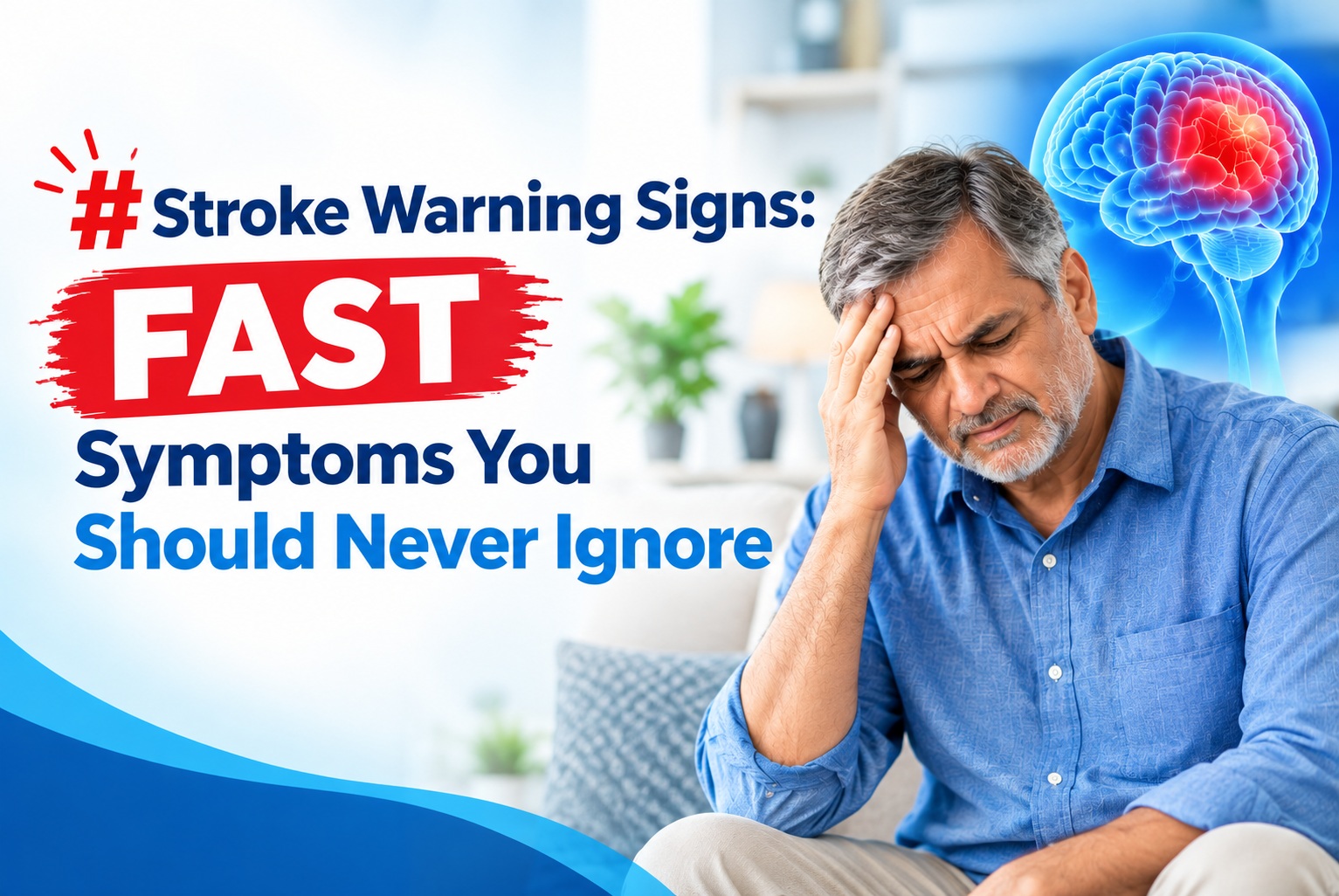
A stroke can happen suddenly, and recognizing the warning signs quickly can make a critical difference. The symptoms may appear without much warning and can affect movement, speech, vision, balance or coordination.
One of the easiest ways to remember some of the major stroke warning signs is the FAST method: Face, Arms, Speech and Time. Current stroke-awareness guidance also highlights sudden balance problems and vision changes, which are included in the expanded B.E. FAST approach.
The most important message is simple: do not wait for stroke symptoms to disappear. Treat suspected stroke as a medical emergency and seek immediate medical care.
What Is a Stroke?
A stroke occurs when blood flow to part of the brain becomes blocked or when a blood vessel in the brain ruptures. Without adequate blood and oxygen, brain cells can become damaged rapidly.
The effects of a stroke depend on the area of the brain affected. A person may suddenly develop weakness, difficulty speaking, problems with vision, loss of balance or other neurological symptoms.
Because brain injury can progress quickly, recognizing symptoms early and getting emergency care without unnecessary delay is essential.
What Does FAST Mean in Stroke?
FAST is a simple way to remember three important stroke symptoms and the need to act quickly.
F – Face Drooping
Ask the person to smile.
Does one side of the face appear to droop? Is the smile uneven? Sudden facial weakness or numbness, especially on one side, can be a warning sign of stroke.
A – Arm Weakness
Ask the person to raise both arms.
Does one arm feel weak or numb? Does one arm drift downward compared with the other?
Sudden weakness or numbness in one arm or one side of the body should be treated seriously.
S – Speech Difficulty
Ask the person to repeat a simple sentence.
Is the speech slurred? Are the words difficult to understand? Is the person unable to speak normally or having difficulty understanding what others are saying?
Sudden speech or language problems can indicate that a stroke is affecting the brain.
T – Time to Act
If one or more of these symptoms appear, time matters.
Do not wait to see whether the person improves. Activate emergency medical help immediately and note the time when the symptoms first started or when the person was last known to be well. This information can help healthcare professionals determine appropriate treatment.
B.E. FAST: Other Stroke Symptoms You Should Know
FAST is widely recognized, but stroke awareness can be expanded with B.E. FAST.
B – Balance Problems
A person may suddenly become unsteady, dizzy or unable to walk normally. Sudden loss of coordination or balance can be a stroke warning sign.
E – Eye or Vision Changes
Sudden blurred vision, double vision or loss of vision can occur during a stroke. Unexpected vision changes should be treated as a medical emergency when they appear suddenly.
F – Face
Look for sudden facial drooping or numbness, especially on one side.
A – Arms
Check for sudden weakness or numbness affecting one arm or one side of the body.
S – Speech
Listen for slurred speech, unusual words, difficulty speaking or difficulty understanding speech.
T – Time
Do not delay. Once stroke symptoms are suspected, seek emergency medical care immediately.
Other Signs of Stroke You Should Never Ignore
Not every stroke presents in exactly the same way. Other sudden symptoms may include:
- Severe headache without an obvious cause
- Sudden confusion
- Difficulty understanding spoken language
- Sudden trouble walking
- Loss of coordination
- Sudden vision problems
- Numbness or weakness, particularly on one side of the body
These symptoms can occur individually or in combination. A person does not need to have every symptom for a stroke to be possible.
What Should You Do If You Suspect a Stroke?
The first priority is to obtain emergency medical help.
Do not wait for the symptoms to improve on their own. Do not assume that the person is simply tired, dehydrated or experiencing low blood sugar without proper medical assessment.
Call the appropriate emergency service immediately and clearly report that stroke symptoms may be occurring.
Note the time the symptoms began, or the last time the person was known to be without symptoms. This information is especially important because some emergency stroke treatments are time-sensitive.
Should You Drive a Stroke Patient to the Hospital?
When a stroke is suspected, emergency medical transportation is preferable to having the patient or another person drive to the hospital.
Emergency medical teams can begin assessment and care while transporting the patient. Delays caused by arranging transport independently can be important in a time-sensitive medical emergency.
Why Is Time So Important During a Stroke?
A stroke can cause rapid damage to brain tissue. The longer the affected area remains without adequate blood flow, the greater the risk of lasting neurological problems.
Some treatments for certain ischemic strokes are most effective when patients reach appropriate medical care quickly. Eligibility depends on the type of stroke, timing, imaging findings and other clinical factors.
This is why “wait and watch” is not a safe approach when sudden neurological symptoms appear.
What If Stroke Symptoms Go Away?
Temporary stroke-like symptoms should not be ignored.
A transient ischemic attack, or TIA, can cause symptoms similar to stroke that may resolve after a short period. Even when the symptoms disappear, a TIA can be a warning of an increased risk of a future stroke and requires urgent medical evaluation.
A common mistake is thinking that recovery of symptoms means the problem is over. Temporary symptoms can still require immediate assessment.
Who Is at Higher Risk of Stroke?
Several health and lifestyle factors are associated with increased stroke risk. These include:
- High blood pressure
- Diabetes
- High cholesterol
- Smoking
- Obesity
- Heart disease
- Atrial fibrillation
- Physical inactivity
- Previous stroke or TIA
- Increasing age
- Family history and other individual risk factors
Some risk factors can be modified through medical care and lifestyle changes. Controlling blood pressure, managing diabetes and cholesterol, avoiding tobacco and maintaining an active lifestyle are important parts of stroke prevention.
Can a Stroke Be Prevented?
Not every stroke can be prevented, but many important risk factors can be managed.
Regular health checks can help identify conditions such as high blood pressure, diabetes or abnormal cholesterol before they contribute to cardiovascular or cerebrovascular complications.
Taking prescribed medicines as directed, maintaining healthy lifestyle habits, staying physically active and avoiding tobacco can support long-term cardiovascular and brain health.
What Happens After Reaching the Hospital?
When a person arrives with possible stroke symptoms, the healthcare team may quickly assess the neurological symptoms, medical history and timing of onset.
Depending on the situation, doctors may use brain imaging and other tests to determine whether the stroke is caused by a blood clot or bleeding and to guide treatment.
Treatment depends on the type of stroke and the patient’s individual condition. In eligible ischemic stroke patients, clot-busting medicines or procedures to remove a clot may be considered within appropriate time windows.
The exact treatment decision must always be made by the medical team after appropriate assessment.
Stroke Treatment in Ahmedabad
For people searching for stroke treatment in Ahmedabad, access to timely emergency evaluation is an important consideration.
Stroke care may require rapid assessment, brain imaging, emergency treatment and ongoing medical management. The right treatment depends on the type of stroke, the time since symptoms began and the patient’s medical condition.
Maruti Multispeciality Hospital provides multispeciality healthcare services for patients seeking medical evaluation and treatment in Ahmedabad.
Frequently Asked Questions About Stroke Warning Signs
What are the FAST symptoms of a stroke?
FAST stands for Face drooping, Arm weakness, Speech difficulty and Time to seek emergency help. These signs can help identify a possible stroke quickly.
What are the first signs of a stroke?
Sudden facial weakness, arm or leg weakness, speech difficulty, confusion, vision problems, dizziness, loss of balance and unexplained severe headache can be stroke warning signs.
Can stroke symptoms disappear after a few minutes?
Yes. Temporary symptoms may occur with a TIA. Even when symptoms disappear, urgent medical evaluation is important because a TIA can be a warning of a future stroke.
Should I wait if stroke symptoms are mild?
No. Stroke symptoms do not need to be severe to require urgent evaluation. Sudden neurological changes should be treated seriously and emergency medical help should be activated promptly.
What is the most important thing to remember during a stroke?
Remember FAST and act immediately. Note the time symptoms started, seek emergency medical assistance and avoid unnecessary delays in reaching appropriate stroke care.
Final Takeaway
Stroke symptoms can appear suddenly and may affect the face, arms, speech, balance or vision. Learning the FAST stroke symptoms can help families recognize a possible emergency sooner.
Remember:
F – Face: Is one side of the face drooping?
A – Arms: Is one arm weak or numb?
S – Speech: Is speech unusual or difficult?
T – Time: Get emergency medical help immediately.
Balance and sudden vision changes are additional warning signs to remember under B.E. FAST.
Do not wait for symptoms to disappear. In stroke, timely medical attention can be critical, and even temporary symptoms may require urgent evaluation.
For non-emergency neurological concerns or follow-up care in Ahmedabad, Maruti Multispeciality Hospital can be contacted for medical consultation and guidance.
Consult Maruti Multispeciality Hospital
If you are looking for stroke treatment in Ahmedabad or need medical evaluation for neurological symptoms, timely professional assessment is important.