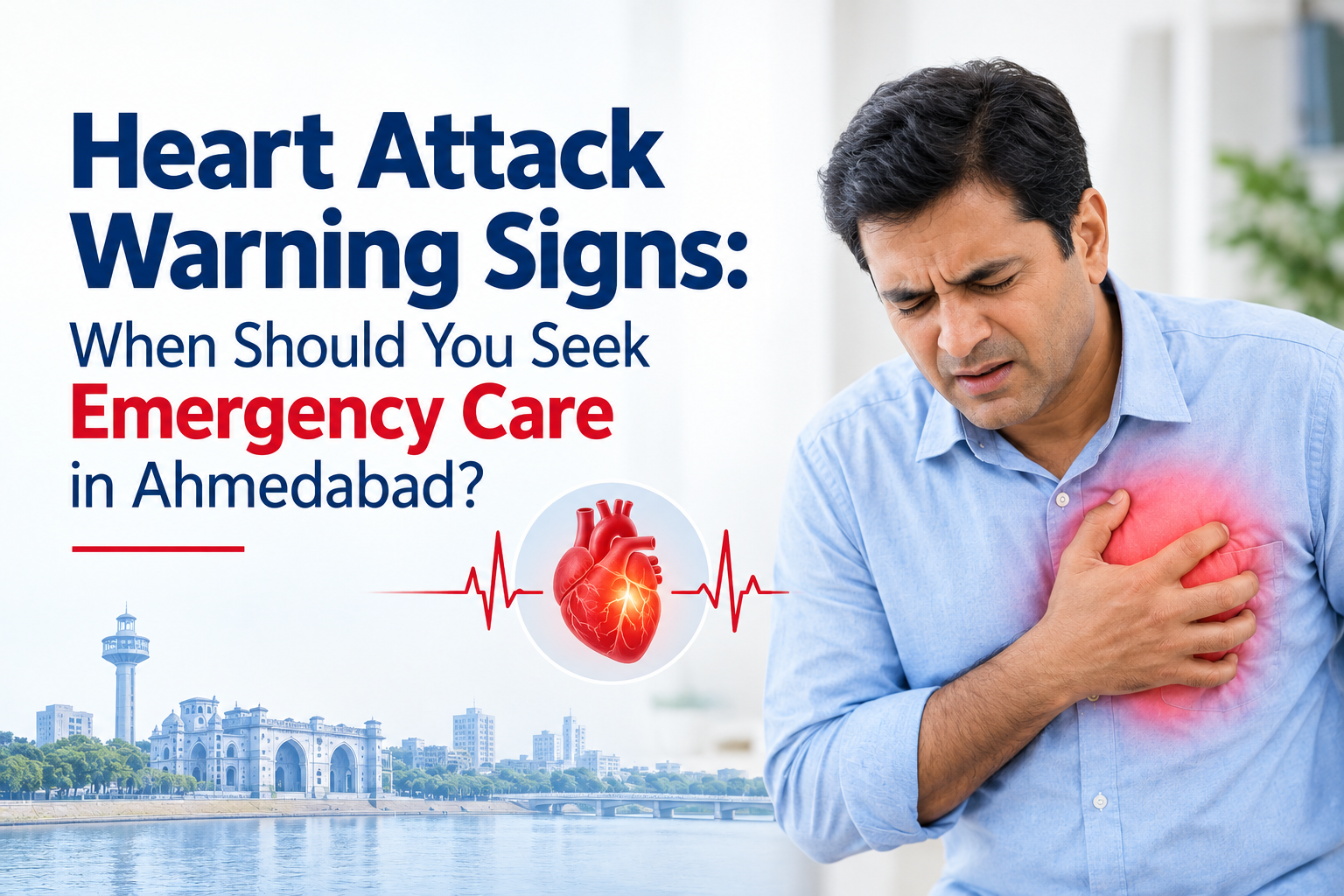
A heart attack can happen unexpectedly, and knowing the warning signs can help a person or family member respond quickly. While many people associate a heart attack with severe chest pain, symptoms can vary. Some people may experience chest pressure or discomfort, while others may notice shortness of breath, sweating, nausea, dizziness, unusual weakness, or discomfort spreading to the arm, shoulder, back, neck, or jaw.
Recognising heart attack warning signs in Ahmedabad is especially important for families caring for older adults or people with risk factors such as high blood pressure, diabetes, high cholesterol, smoking, obesity, or a previous history of cardiovascular disease.
A suspected heart attack should always be treated as a medical emergency. If symptoms are sudden, severe, new, or unexplained, seek emergency medical care without waiting for them to become worse.
Quick Answer: What Are the Main Warning Signs of a Heart Attack?
Common heart attack symptoms may include:
- Chest pain, pressure, tightness, or discomfort
- Shortness of breath
- Pain or discomfort in the arm, shoulder, back, neck, or jaw
- Cold sweating
- Nausea or vomiting
- Dizziness or light-headedness
- Sudden or unusual weakness
- Fainting or near-fainting
- Unusual fatigue
Not everyone experiences all of these symptoms, and some people may have less typical symptoms. Therefore, unexplained symptoms that could indicate a heart problem should not be ignored.
What Is a Heart Attack?
A heart attack, also called a myocardial infarction, occurs when blood flow to part of the heart muscle becomes blocked or significantly reduced. When the heart muscle does not receive enough oxygen-rich blood, the affected tissue can become damaged.
The severity and symptoms of a heart attack can vary from one person to another. Because a heart attack can become life-threatening, timely medical evaluation is important.
It is also important to understand that not every episode of chest pain is caused by a heart attack. However, it is not safe to determine the cause based only on symptoms at home.
7 Important Heart Attack Warning Signs
1. Chest Pain, Pressure or Tightness
Chest discomfort is one of the most recognised symptoms of a heart attack.
A person may describe it as:
- Pressure or heaviness
- Tightness or squeezing
- Fullness
- Burning or uncomfortable pressure
- Pain in the centre or left side of the chest
The discomfort may last for several minutes, go away and return, or occur with other symptoms.
New or unexplained chest discomfort should receive urgent medical attention, particularly when other warning signs are present.
2. Pain Spreading to the Arm, Shoulder, Back, Neck or Jaw
Heart-related discomfort does not always remain in the chest.
Pain or discomfort may spread to:
- One or both arms
- Shoulders
- Upper back
- Neck
- Jaw
If this type of discomfort occurs together with chest pressure, breathlessness, sweating, nausea, or weakness, emergency medical evaluation is important.
3. Shortness of Breath
Sudden or unexplained breathlessness can occur during a heart attack.
A person may feel unable to breathe comfortably, become breathless with minimal activity, or experience difficulty breathing even while resting.
Shortness of breath can have many causes, but when it occurs suddenly or together with chest discomfort and other warning signs, it should be treated seriously.
4. Cold Sweating
Unexpected cold sweating can be another warning sign.
If a person suddenly becomes sweaty without an obvious reason and also experiences chest discomfort, nausea, dizziness, weakness, or breathlessness, urgent medical assessment may be required.
5. Nausea, Vomiting or Indigestion-Like Discomfort
Heart attack symptoms can sometimes resemble indigestion or stomach discomfort.
Some people may experience nausea, vomiting, or an uncomfortable sensation in the upper abdomen.
This can make cardiac symptoms difficult to recognise. If digestive symptoms appear suddenly and occur with chest discomfort, sweating, breathlessness, weakness, or dizziness, seek urgent medical care.
6. Dizziness, Weakness or Fainting
Sudden dizziness, light-headedness, unusual weakness, or fainting can occur during a cardiac emergency.
These symptoms become particularly concerning when they appear with chest discomfort, breathlessness, sweating, or other possible heart attack symptoms.
7. Unusual or Sudden Fatigue
Some people may experience unusual tiredness or weakness rather than classic severe chest pain.
This can be particularly difficult to recognise because fatigue may have many everyday causes.
However, sudden or unexplained fatigue accompanied by breathlessness, nausea, sweating, dizziness, or chest discomfort should not be ignored.
Can Heart Attack Symptoms Be Different in Women?
Yes. Heart attack symptoms can vary between individuals, and women may experience symptoms that are less typical or less obvious.
Possible symptoms include:
- Chest discomfort
- Shortness of breath
- Unusual fatigue
- Nausea
- Sweating
- Dizziness
- Back, shoulder, or jaw discomfort
This does not mean that every symptom in women indicates a heart attack. However, new or unexplained symptoms, particularly when several occur together, should be medically evaluated promptly.
Who Is at Higher Risk of a Heart Attack?
Certain factors can increase cardiovascular risk. These may include:
- High blood pressure
- Diabetes
- High cholesterol
- Smoking or tobacco use
- Obesity
- Physical inactivity
- Increasing age
- Family history of heart disease
- Previous cardiovascular disease
- Certain metabolic or lifestyle-related risk factors
Having one or more risk factors does not mean a heart attack will definitely occur. However, people with cardiovascular risk factors should discuss appropriate screening, lifestyle measures, and medical follow-up with a qualified healthcare professional.
What Should You Do If You Suspect a Heart Attack?
If you think someone may be experiencing a heart attack, do not wait for the symptoms to become severe.
Take these steps:
- Seek emergency medical help immediately.
- Keep the person calm and allow them to rest.
- Avoid unnecessary walking or physical exertion.
- Do not attempt to diagnose the condition yourself.
- Follow instructions given by emergency medical professionals.
- If the person becomes unresponsive and is not breathing normally, follow emergency instructions and begin CPR if you are trained to do so.
Do not rely on an online article to decide whether symptoms are serious. A healthcare professional needs to assess the person and determine the appropriate treatment.
When Should You Visit an Emergency Hospital in Ahmedabad?
Seek emergency medical care immediately if a person develops:
- New or unexplained chest pain or pressure
- Chest discomfort with shortness of breath
- Chest discomfort with cold sweating
- Pain spreading to the arm, shoulder, back, neck, or jaw
- Sudden severe weakness
- Dizziness or fainting
- Nausea combined with other possible heart attack symptoms
- Several concerning symptoms occurring together
The safest approach is to seek urgent medical assessment rather than waiting to see whether symptoms disappear.
For families searching for an emergency hospital in Ahmedabad, it is useful to choose a healthcare facility that can provide prompt emergency assessment and access to appropriate specialist care when required.
How Is a Suspected Heart Attack Evaluated?
When a patient reaches an emergency department with possible heart attack symptoms, the medical team may evaluate the symptoms, medical history, vital signs, and other clinical findings.
Depending on the patient’s condition, investigations may include:
- Electrocardiogram (ECG)
- Blood tests, including cardiac biomarkers
- Blood pressure and oxygen monitoring
- Other diagnostic tests when clinically appropriate
The exact evaluation and treatment depend on the individual patient’s condition.
This is why heart attack treatment in Ahmedabad should always begin with timely professional medical assessment rather than self-treatment.
Can Heart Attacks Be Prevented?
Not every heart attack can be prevented, but many cardiovascular risk factors can be managed.
Helpful steps may include:
Regular Health Checkups
Regular medical checkups can help identify conditions such as high blood pressure, diabetes, and high cholesterol.
Healthy Eating
A balanced eating pattern with appropriate portions can support cardiovascular health.
Regular Physical Activity
Appropriate physical activity can support heart and overall health. People with existing medical conditions should discuss suitable exercise with their healthcare professional.
Avoiding Tobacco
Smoking and tobacco use are significant cardiovascular risk factors. Avoiding tobacco can support long-term heart health.
Managing Existing Conditions
People with high blood pressure, diabetes, high cholesterol, or other cardiovascular conditions should follow their healthcare professional’s recommendations and maintain regular follow-up.
Frequently Asked Questions About Heart Attack Warning Signs
What is the most common warning sign of a heart attack?
Chest discomfort, pressure, tightness, or pain is one of the most recognised heart attack symptoms. However, symptoms can vary, and some people may experience breathlessness, sweating, nausea, weakness, or discomfort in other parts of the body.
Can a heart attack happen without severe chest pain?
Yes. Some people may experience less typical symptoms such as shortness of breath, unusual fatigue, nausea, dizziness, sweating, or discomfort in the arm, back, shoulder, neck, or jaw.
Can indigestion be a sign of a heart attack?
Some heart attack symptoms can feel similar to indigestion or upper abdominal discomfort. If such symptoms are sudden, unexplained, or accompanied by chest discomfort, breathlessness, sweating, nausea, or weakness, seek urgent medical evaluation.
How quickly should I seek help for possible heart attack symptoms?
If symptoms suggest a possible heart attack, seek emergency medical care immediately. Do not wait for symptoms to become severe or assume they will disappear on their own.
Is every chest pain a heart attack?
No. Chest pain can have several causes. However, new, severe, unexplained, or persistent chest discomfort—especially when accompanied by other warning signs—requires urgent medical assessment.
Where should I seek cardiac emergency care in Ahmedabad?
If you experience symptoms that may indicate a heart attack, seek emergency medical care at a suitable emergency healthcare facility in Ahmedabad as quickly as possible. The priority is prompt medical assessment rather than waiting for symptoms to resolve.
Consultation & Medical Care at Maruti Multispeciality Hospital, Ahmedabad
If you are looking for medical consultation or evaluation for heart-related symptoms in Ahmedabad, Maruti Multispeciality Hospital provides multispeciality healthcare services for patients and families.
For non-emergency concerns such as recurring chest discomfort, breathlessness, blood pressure-related concerns, or cardiovascular risk factors, consultation with an appropriate healthcare professional can help determine whether further evaluation is required.
When Should You Seek Emergency Care?
If you are currently experiencing possible heart attack symptoms such as chest pressure, severe or unexplained chest discomfort, sudden breathlessness, cold sweating, fainting, or pain spreading to the arm, shoulder, back, neck, or jaw, do not wait for a routine consultation. Seek emergency medical care immediately.
For consultation and medical assistance, contact Maruti Multispeciality Hospital, Ahmedabad and speak with the appropriate healthcare team.
CTA: Need medical consultation in Ahmedabad? Contact Maruti Multispeciality Hospital for appropriate medical evaluation and guidance.
Key Takeaway
A heart attack does not always begin with dramatic chest pain. Chest pressure, shortness of breath, cold sweating, nausea, dizziness, unusual weakness, or discomfort spreading to the arm, shoulder, back, neck, or jaw can also be important warning signs.
The most important message is simple: do not ignore possible heart attack symptoms and do not delay emergency medical evaluation.
For families in Ahmedabad, Sola, Science City, Gota, Thaltej, and nearby areas, knowing the warning signs and where to seek timely medical care can help them respond more confidently during a medical emergency.