
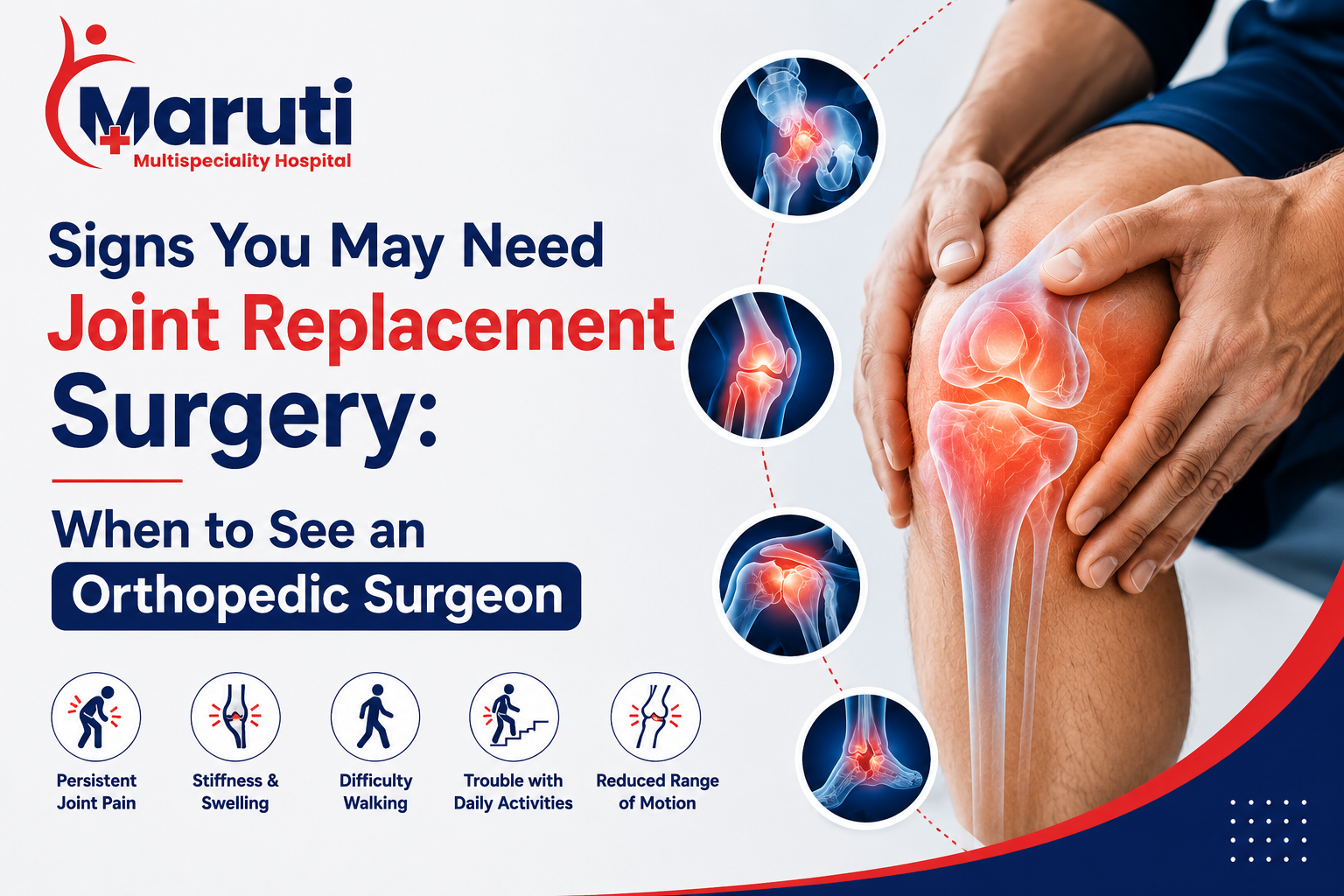
Introduction
Joint pain is one of the most common musculoskeletal problems affecting adults, especially as they age. Whether it develops gradually due to arthritis or results from an injury, persistent joint pain can significantly affect mobility, daily activities, and overall quality of life. While many joint conditions can be managed with medication, physiotherapy, lifestyle modifications, and other non-surgical treatments, there are situations where these approaches may no longer provide adequate symptom relief.
Joint Replacement Surgery may be considered when severe joint damage leads to ongoing pain, stiffness, and reduced joint function. Understanding the warning signs can help individuals seek timely medical evaluation and gain a better understanding of the available treatment options.
This article explains common signs that may indicate the need for Joint Replacement Surgery and discusses when it may be appropriate to consult an orthopaedic surgeon for further assessment.
What Is Joint Replacement Surgery?
Joint Replacement Surgery is a procedure in which a damaged joint is replaced with an artificial implant designed to restore function and reduce pain. The most commonly replaced joints include:
- Knee joints
- Hip joints
- Shoulder joints
- Elbow joints
The procedure is generally recommended when joint damage becomes severe enough to interfere with daily activities and conservative treatments are no longer effective.
Common Causes of Joint Damage
Several conditions can lead to progressive joint deterioration, including:
Osteoarthritis
Osteoarthritis is the most common cause of joint replacement procedures. It occurs when the protective cartilage within a joint gradually wears away, causing pain, stiffness, and reduced mobility.
Rheumatoid Arthritis
This autoimmune condition causes chronic inflammation that can damage joint structures over time.
Joint Injuries
Fractures, ligament injuries, and repetitive stress injuries may accelerate joint degeneration.
Avascular Necrosis
This condition occurs when reduced blood supply causes bone tissue to deteriorate, leading to joint collapse.
Post-Traumatic Arthritis
Arthritis that develops following a previous injury can result in chronic joint pain and stiffness.
Signs You May Need Joint Replacement Surgery
Recognizing the symptoms of advanced joint damage is important. While only an orthopedic surgeon can determine whether surgery is appropriate, the following signs may indicate that further evaluation is needed.
1. Persistent Joint Pain That Does Not Improve
Occasional joint discomfort is common, but persistent pain that continues for months despite treatment may indicate significant joint damage.
Warning sign include:
- Pain during walking
- Pain while climbing stairs
- Pain during routine household activities
- Pain that persists despite medication
If joint pain interferes with everyday activities, it may be time to seek specialized orthopedic evaluation.
2. Chronic Pain Even While Resting
Many people initially experience joint pain only during physical activity. As joint deterioration progresses, pain may occur even while:
- Sitting
- Resting
- Sleeping
- Watching television
Night pain is often considered a sign of advanced joint disease and should not be ignored.
3. Difficulty Walking Short Distances
One of the most noticeable signs of severe joint damage is reduced mobility.
You may find it difficult to:
- Walk around your home
- Visit nearby shops
- Perform routine errands
- Participate in social activities
Reduced walking ability can significantly affect independence and overall quality of life.
4. Joint Stiffness That Limits Movement
Joint stiffness often accompanies advanced arthritis.
Common symptoms include:
- Difficulty bending the knee
- Trouble getting out of a chair
- Limited hip movement
- Reduced flexibility
Morning stiffness that lasts for extended periods may indicate worsening joint degeneration.
5. Swelling and Inflammation That Keeps Returning
Inflamed joints often become:
- Swollen
- Tender
- Warm to touch
- Painful during movement
While occasional inflammation may respond to treatment, recurring swelling can signal ongoing structural damage within the joint.
6. Difficulty Performing Daily Activities
When joint damage progresses, routine tasks may become increasingly difficult.
Examples include:
- Standing for extended periods
- Climbing stairs
- Sitting and rising from chairs
- Getting into vehicles
- Walking outdoors
When daily activities become challenging despite treatment, Joint Replacement Surgery may become a consideration.
7. Reduced Range of Motion
Healthy joints allow smooth and comfortable movement.
Severe joint damage may lead to:
- Inability to fully bend the knee
- Difficulty rotating the hip
- Restricted joint flexibility
- Loss of normal movement patterns
Reduced range of motion often affects both mobility and overall function.
8. Joint Deformity
Advanced arthritis can sometimes cause visible changes in joint alignment.
Examples include:
- Bowed legs
- Knock knees
- Changes in walking posture
- Hip alignment abnormalities
Joint deformity may indicate significant cartilage loss and structural deterioration.
9. Dependence on Walking Aids
If you increasingly rely on:
- Walking sticks
- Crutches
- Walkers
- Support from family members
it may indicate that joint function has declined significantly and may require further medical evaluation.
An orthopedic surgeon in Ahmedabad can assess joint function, review imaging studies, and determine whether Joint Replacement Surgery may be considered based on the severity of joint damage and its impact on daily activities.
10. Non-Surgical Treatments No Longer Provide Relief
Most Orthopaedic specialists recommend conservative treatment before considering surgery.
These may include:
- Physiotherapy
- Exercise programs
- Weight management
- Anti-inflammatory medications
- Joint injections
However, if symptoms continue despite these treatments, further evaluation may be necessary.
When Should You See an Orthopaedic Surgeon?
Many patients delay consultation because they assume joint pain is a normal part of aging.
However, you should consider visiting an Orthopaedic surgeon if:
- Pain persists for several months
- Walking becomes difficult
- Sleep is disturbed by pain
- Joint stiffness worsens
- Daily activities are affected
- Medications provide only temporary relief
Early assessment can help determine the most appropriate treatment strategy and prevent further deterioration.
HowOrthopaedic Surgeons Evaluate Joint Problems
During consultation, an Orthopaedic specialist typically performs:
Medical History Review
The surgeon will discuss:
- Symptom duration
- Previous treatments
- Activity limitations
- Medical conditions
Physical Examination
This may include evaluating:
- Joint alignment
- Range of motion
- Strength
- Walking pattern
Diagnostic Imaging
Imaging studies may include:
- X-rays
- MRI scans
- CT scans when necessary
These tests help determine the severity of joint damage and guide treatment recommendations.
Benefits of Timely Joint Replacement Surgery
For appropriately selected patients, Joint Replacement Surgery may provide several potential benefits.
Improved Mobility
Many individuals experience better movement and increased walking ability following recovery.
Reduced Pain
Joint replacement is often performed to address severe pain caused by damaged joint surfaces.
Better Quality of Life
Patients may find it easier to participate in:
- Family activities
- Social events
- Daily routines
- Light recreational activities
Improved Independence
Restoring joint function may help individuals perform routine tasks with greater confidence.
Joint Replacement Surgery in Ahmedabad
Patients experiencing persistent knee or hip pain often seek specialized orthopedic evaluation to understand available treatment options. Advances in Orthopaedic care, surgical techniques, and rehabilitation programs have improved outcomes for individuals requiring Joint Replacement Surgery.
For those seeking Orthopaedic consultation and joint replacement treatment in Ahmedabad, Maruti Multispeciality Hospital provides comprehensive Orthopaedic services, including evaluation, diagnosis, treatment planning, joint replacement procedures, and post-operative rehabilitation under experienced Orthopaedic specialists.
Tips to Protect Your Joints
Even if surgery is not immediately required, maintaining joint health remains important.
Consider the following:
- Maintain a healthy body weight
- Stay physically active
- Perform joint-friendly exercises
- Avoid excessive strain on joints
- Follow medical advice for arthritis management
- Seek timely Orthopaedic evaluation when symptoms worsen
Conclusion
Persistent joint pain should never be ignored, particularly when it begins affecting mobility, sleep, and daily activities. Symptoms such as chronic pain, stiffness, swelling, reduced movement, and difficulty walking may indicate advanced joint damage that requires professional evaluation.
While non-surgical treatments remain effective for many patients, there are situations where Joint Replacement Surgery becomes an appropriate option. Consulting an orthopedic surgeon at the right time can help identify the cause of symptoms and determine the most suitable treatment approach.
For individuals experiencing ongoing joint problems in Ahmedabad, a comprehensive Orthopaedic evaluation can help assess joint health, identify the underlying cause of symptoms, and discuss available treatment options based on individual clinical needs. Maruti Multispeciality Hospital, Ahmedabad, provides Orthopaedic evaluation and treatment services for various joint-related conditions, including arthritis and joint degeneration.
Frequently Asked Questions (FAQs)
1. What are the common signs that indicate I may need Joint Replacement Surgery?
Persistent joint pain, stiffness, swelling, reduced mobility, difficulty walking, and pain during daily activities are common signs that may require Orthopaedic evaluation.
2. Which joints are most commonly replaced?
The knee and hip are the most commonly replaced joints, although shoulder and elbow replacements may also be performed when necessary.
3. Can arthritis lead to Joint Replacement Surgery?
Yes. Advanced osteoarthritis and rheumatoid arthritis are among the leading reasons patients undergo Joint Replacement Surgery.
4. How do orthopedic surgeons determine if surgery is necessary?
Orthopaedic surgeons assess symptoms, physical examination findings, X-rays, and other imaging studies before recommending treatment options.
5. Is Joint Replacement Surgery only for older adults?
No. While it is more common among older individuals, younger patients with severe joint damage, arthritis, or injury-related degeneration may also be candidates for Joint Replacement Surgery.