
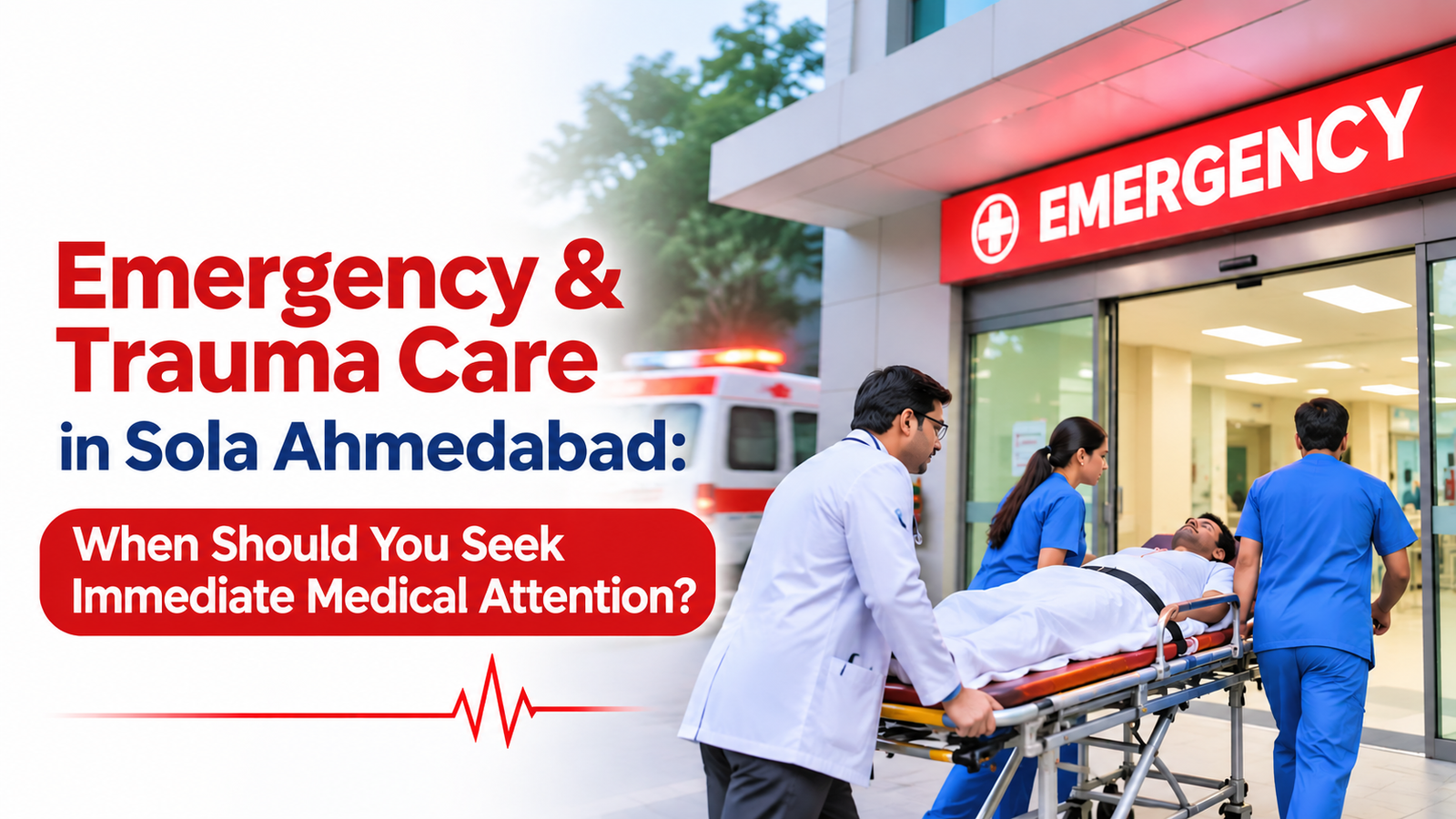
Emergency & Trauma Care in Sola Ahmedabad is essential when unexpected medical emergencies happen at home, on the road, at work or in public places. Road accidents, serious injuries, sudden chest pain, breathing difficulties, severe bleeding and loss of consciousness are situations that may require immediate medical attention. Recognising these warning signs and reaching the right emergency hospital without delay can improve patient outcomes and help save lives.
For individuals and families searching for an Emergency Hospital in Sola Ahmedabad, knowing when to visit an emergency department, what trauma care involves and which hospital facilities to consider can help them respond more confidently during critical situations.
Maruti Multispeciality Hospital, Ahmedabad, provides 24×7 emergency and trauma care services, along with critical care support and ambulance facilities. Patients and families from Sola, Science City, Gota, Thaltej, Jagatpur and nearby areas can contact the hospital for emergency medical assistance.
What Is Emergency and Trauma Care?
Emergency care refers to immediate medical assessment and treatment for sudden illnesses, injuries or health conditions that may become serious without timely attention.
Trauma care focuses on injuries caused by external events such as road accidents, falls, workplace incidents, burns and physical injuries. Depending on the severity, patients may require wound management, fracture evaluation, surgical assessment, intensive monitoring or other specialised treatment.
An emergency department helps medical professionals assess patients, identify urgent health concerns and determine the appropriate treatment approach.
Emergency and trauma care may involve:
- Initial assessment of the patient’s condition.
- Monitoring of vital signs such as pulse, blood pressure and oxygen levels.
- Evaluation of injuries and possible internal complications.
- Necessary diagnostic investigations.
- Wound management and fracture assessment.
- Stabilisation and critical care when required.
- Referral or coordination with relevant medical specialists.
The treatment plan depends on the patient’s condition and the urgency of medical intervention.
When Should You Visit an Emergency Hospital Immediately?
Not every health problem requires emergency treatment. However, certain symptoms should never be ignored because they may indicate a serious medical condition.
1. Road Accidents and Serious Injuries
Road accidents can cause visible injuries as well as internal damage that may not be immediately noticeable. Even when a person appears conscious and can communicate, medical evaluation may be necessary after a significant accident.
Seek immediate medical attention in situations involving:
- Severe bleeding or deep wounds.
- Suspected fractures or dislocations.
- Head injuries or loss of consciousness.
- Severe abdominal or chest pain after an accident.
- Difficulty breathing following an injury.
- Suspected neck or spinal injuries.
Patients with serious accident-related injuries may require prompt trauma assessment and further treatment.
2. Sudden Chest Pain or Possible Heart Attack Symptoms
Chest pain or pressure can sometimes indicate a heart-related emergency. Certain symptoms require immediate medical assessment rather than waiting for a routine appointment.
Important warning signs include:
- Pressure, tightness or discomfort in the chest.
- Pain spreading towards the arm, shoulder, back, neck or jaw.
- Sudden breathlessness.
- Cold sweating or unexplained weakness.
- Dizziness, fainting or nausea along with chest discomfort.
Heart attack symptoms can vary between individuals. Do not assume that symptoms are harmless simply because the pain is mild or disappears temporarily.
3. Difficulty in Breathing
Sudden or severe breathing difficulty can be associated with serious respiratory, cardiac or allergic conditions.
Emergency medical attention is important if someone experiences:
- Severe shortness of breath.
- Difficulty speaking because of breathlessness.
- Bluish lips or face.
- Sudden breathing difficulty with chest discomfort.
- Severe wheezing or signs of an allergic reaction.
Breathing emergencies should not be managed through home remedies or self-medication.
4. Uncontrolled Bleeding and Deep Wounds
Bleeding caused by accidents, sharp objects or other injuries may require urgent medical care.
Deep cuts, heavy bleeding and wounds that do not stop bleeding with direct pressure should be assessed promptly.
Major blood loss can become life-threatening, making timely medical intervention important.
5. Sudden Stroke Warning Signs
A stroke occurs when blood supply to part of the brain is interrupted or when bleeding occurs in the brain. Recognising its warning signs quickly is important.
Remember the FAST method:
- F – Face: One side of the face may droop.
- A – Arms: One arm may become weak or difficult to lift.
- S – Speech: Speech may become unclear or difficult to understand.
- T – Time: Seek emergency medical attention immediately.
Other warning signs can include sudden vision problems, loss of balance, confusion or severe unexplained headache.
Even if symptoms improve after a few minutes, immediate medical evaluation remains important.
6. Severe Burns and Major Injuries
Burns caused by fire, hot liquids, chemicals or electricity can damage the skin and underlying tissues.
Large burns, deep burns, electrical burns, chemical burns and burns involving the face or breathing passages require urgent medical assessment.
The appropriate treatment depends on the depth, size and location of the burn and the patient’s overall condition.
What Types of Emergency and Trauma Services May Patients Require?
Emergency treatment varies according to the nature and severity of the medical condition. Some patients may require immediate stabilisation, while others may need investigations, surgical intervention or intensive care.
Common emergency healthcare requirements include:
Accident and Injury Management: Assessment of injuries following road accidents, falls and workplace incidents.
Fracture Evaluation: Examination of suspected bone fractures, dislocations and other musculoskeletal injuries.
Wound Management: Medical assessment and treatment of deep cuts, bleeding injuries and wounds.
Cardiac Emergency Assessment: Initial evaluation of symptoms such as chest pain, breathlessness and suspected heart-related complications.
Critical Care Support: Intensive monitoring and medical management for patients with serious or unstable conditions.
Emergency Surgical Assessment: Evaluation of patients who may require urgent surgical intervention.
The treating medical team determines which investigations and treatments are necessary for each patient.
Why Is Timely Emergency Medical Attention Important?
During serious medical situations, delaying treatment can increase the risk of complications. Early professional assessment helps doctors identify potentially life-threatening conditions and decide on appropriate medical intervention.
Some important reasons to seek timely emergency care include:
- Early Identification: Medical evaluation helps identify injuries or illnesses that may not be immediately visible.
- Patient Stabilisation: Appropriate medical support may help manage unstable conditions.
- Monitoring: Patients with serious injuries or symptoms may require continuous observation.
- Specialist Evaluation: Certain emergencies require assessment by relevant medical specialists.
- Further Treatment Planning: Early diagnosis helps determine whether medication, surgery, ICU admission or additional investigations are required.
Remember that reaching a suitable emergency facility promptly is more important than trying to diagnose a serious condition at home.
What Should You Do Before Reaching the Hospital During an Emergency?
Knowing a few basic safety measures can help patients and bystanders respond more appropriately while arranging professional medical assistance.
- Stay Calm: Avoid panic and assess whether the surroundings are safe.
- Contact Emergency Services: Arrange ambulance assistance or seek immediate medical help.
- Control External Bleeding: Apply firm, direct pressure to a bleeding wound using a clean cloth or dressing, if safe to do so.
- Avoid Unnecessary Movement: Do not move a person with a suspected neck, back or spinal injury unless there is immediate danger.
- Do Not Give Food or Water: Avoid giving anything by mouth to an unconscious or severely injured person.
- Share Medical Information: Inform the medical team about known allergies, existing medical conditions and current medications when possible.
Do not attempt complicated first aid or delay professional treatment while trying home remedies. Follow instructions from emergency medical professionals.
How to Choose an Emergency Hospital in Sola Ahmedabad?
Choosing an appropriate hospital during a medical emergency involves considering the availability of essential healthcare services and emergency support.
Patients and families can consider the following factors:
1. Round-the-Clock Emergency Availability: Check whether emergency medical services are available during nights, weekends and holidays.
2. Trauma Care Facilities: For accident-related injuries, access to appropriate trauma assessment and treatment is important.
3. ICU and Critical Care Support: Patients with serious medical conditions may require continuous monitoring and intensive care.
4. Diagnostic Facilities: Investigations such as X-rays, sonography and pathology tests may help doctors assess certain injuries and medical conditions.
5. Ambulance Availability: Emergency transportation can be important when a patient cannot safely travel independently.
6. Surgical Support: Some emergency conditions may require urgent surgical evaluation and treatment.
7. Hospital Accessibility: For residents of Sola, Science City, Gota, Thaltej and Jagatpur, knowing the location and emergency contact details of a nearby hospital can help reduce confusion during an urgent situation.
Emergency and Trauma Care at Maruti Multispeciality Hospital, Ahmedabad
Maruti Multispeciality Hospital, located near Sola Overbridge in Ahmedabad, provides round-the-clock emergency and trauma care services for patients requiring urgent medical attention.
The hospital’s emergency healthcare services include accident-related support, trauma care, fracture management, cardiac emergency assessment and critical care support.
Important healthcare facilities include:
- 24×7 Emergency and Trauma Care.
- ICU and Critical Care Services.
- ICU-on-Wheels Ambulance Service.
- X-ray and Sonography Facilities.
- Pathology and Diagnostic Support.
- Operation Theatre Facilities.
- Multispeciality Medical and Surgical Services.
The hospital’s ambulance service provides emergency patient transportation with critical care support. The type of care required is determined by the patient’s medical condition and the treating team.
For families living in Sola, Science City, Gota, Thaltej, Jagatpur and nearby Ahmedabad areas, knowing the hospital’s emergency contact details can be helpful when urgent medical assistance is needed.
Frequently Asked Questions About Emergency and Trauma Care
1. When should I visit an emergency hospital?
Visit an emergency hospital immediately if you experience severe chest pain, difficulty breathing, uncontrolled bleeding, loss of consciousness, serious accident injuries or sudden stroke symptoms.
2. What is the difference between emergency care and trauma care?
Emergency care covers sudden illnesses and injuries requiring immediate medical attention. Trauma care specifically focuses on injuries caused by accidents, falls, burns and other external events.
3. Does Maruti Multispeciality Hospital provide 24-hour emergency services?
Yes. Maruti Multispeciality Hospital provides 24×7 emergency, trauma and critical care support in Ahmedabad.
4. Is ambulance assistance available at Maruti Multispeciality Hospital?
Yes. The hospital provides a 24×7 ambulance service, including an ICU-on-Wheels facility with critical care support. Contact the hospital to coordinate emergency transportation.
5. Where can I find emergency medical care near Science City, Ahmedabad?
Residents of Science City and nearby areas can contact Maruti Multispeciality Hospital in the Sola area for information about emergency medical care and available facilities.
6. Do accident patients need immediate medical evaluation even without visible injuries?
Yes. Some injuries, including internal bleeding and head injuries, may not show obvious external signs. Medical evaluation is important after significant accidents, even when visible injuries appear minor.
7. Is emergency treatment available at night?
Maruti Multispeciality Hospital lists its emergency and critical care services as available 24×7, including nights, weekends and holidays.
Get Emergency Medical Assistance in Sola Ahmedabad
Medical emergencies require timely attention and appropriate medical evaluation. Whether it is an accident-related injury, sudden chest pain, breathing difficulty or another serious health concern, seeking professional medical assistance without delay is important.
Maruti Multispeciality Hospital, Ahmedabad, provides 24×7 Emergency & Trauma Care, ICU facilities and ambulance support for patients requiring urgent medical attention.
If you or a family member needs emergency medical assistance near Sola, Science City, Gota, Thaltej or surrounding areas of Ahmedabad, contact the hospital directly.
Medical Disclaimer: This article is intended for general health awareness and educational purposes only. It does not replace professional medical advice, diagnosis or treatment. In case of a medical emergency, seek immediate professional medical assistance.